Helping Families Through Community Connections
A familiar community contact can make asking for help feel easier. BestCareMatch™ works with community organizations to help Washington families find care information, prepare questions, and understand their next step.
A Familiar Connection Can Be the First Step Toward Help
Practical Support Through Community Connections
Communities often notice the earliest signs that an older adult may be struggling: missed gatherings, changes in behavior, mobility concerns, or social withdrawal. Because these patterns emerge in familiar environments, community agencies play a powerful role in early awareness long before a family initiates formal help.
BestCareMatch™ partners with community organizations to provide plain-language care information, everyday safety awareness, and help with benefits questions. We respect each family’s culture and privacy, and leave medical and official decisions with the responsible professionals and agencies.
We aim to help families find information and contacts that respect their language, culture, and preferences.
Community Groups That Can Help Families Find Support
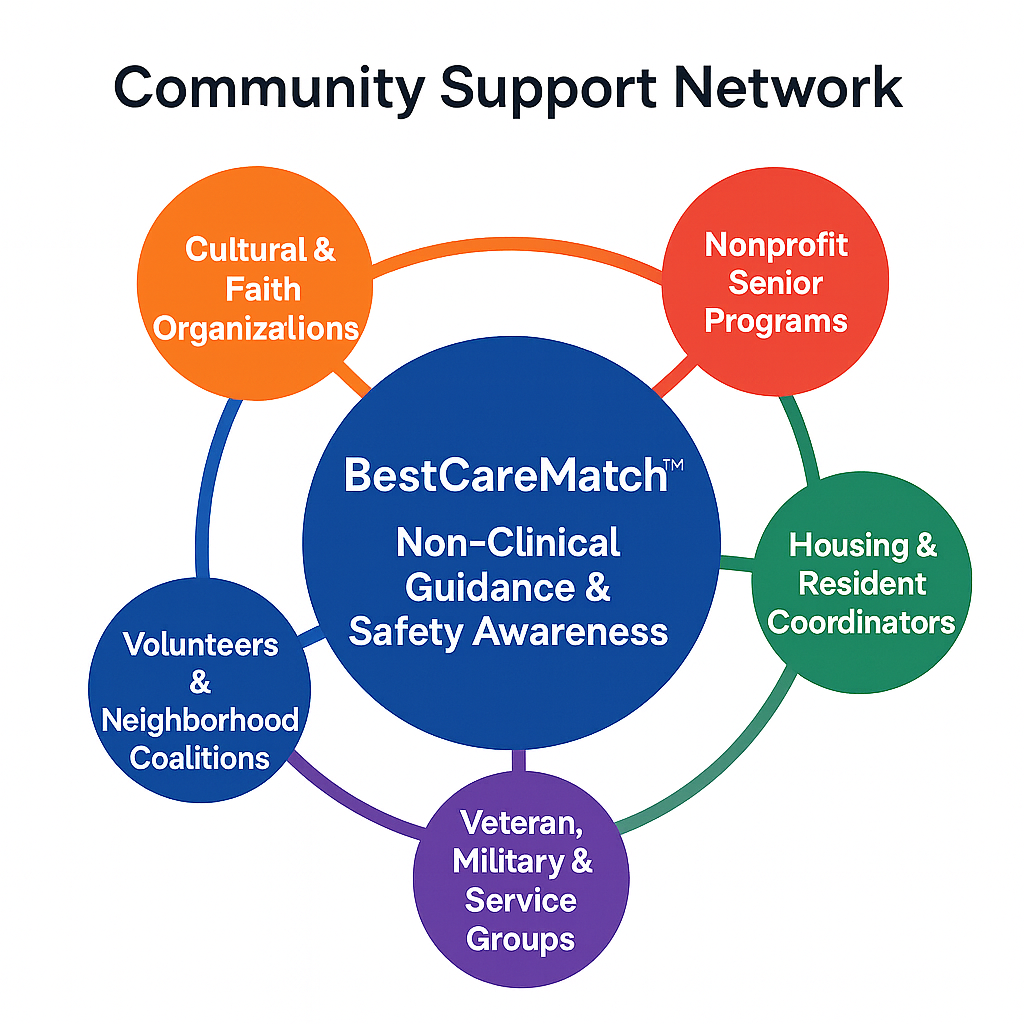
A community support network can include:
- Cultural & Faith Organizations
- Nonprofit Senior Programs
- Housing & Resident Coordinators
- Veteran, Military & Service Groups
- Volunteer & Neighborhood Coalitions
At the center:
BestCareMatch™ – Non-Clinical Guidance & Safety Awareness
Each group brings a different connection to local families and can help them identify a useful next step.
Why Community Partnerships Matter
Community groups may hear about practical concerns early. Those concerns can include:
- Isolation or sudden withdrawal
- Difficulty completing routine tasks
- Missed medical appointments or medication confusion
- Signs of mobility decline
- Unsafe home environments
- Uncertainty about how to navigate benefits
Community leaders can contact us for general information and referral questions. Clinical decisions, investigations, and eligibility assessments remain with the responsible professionals or agencies.
How BestCareMatch™ Supports Community Agencies
Our role is strictly educational and non-clinical. We provide families and community groups with the information they need to make informed, responsible decisions.
We help community partners by offering:
- Non-clinical safety and risk awareness guidance
- Early identification of environmental and functional concerns
- Explanation of long-term care settings (AFH, ALF, memory care)
- Help preparing questions about Medicaid, Medicare, and long-term care
- Tools for families to prepare before emergencies occur
- Culturally sensitive communication strategies
- Localized support rooted in understanding community norms
We do not:
- Conduct medical, cognitive, or functional assessments
- Replace APS, HCS, or DSHS responsibilities
- Intervene in investigations or case determinations
- Provide crisis intervention, legal advice, or medical recommendations
This protects community agencies and maintains compliance with Washington State standards.
Culturally Responsive Support
Communities are diverse, and support must reflect that diversity. BestCareMatch™ respects:
- Language differences
- Cultural expectations around caregiving
- Generational family structures
- Faith-based practices
- Privacy expectations
- Community traditions
Tell us what matters in your community. Listening helps us offer more useful, respectful support.
Realistic Situations Community Leaders Encounter
Here are common scenarios community partners may observe:
Scenario 1 — “Something Seems Off”
A member arrives at gatherings confused or unusually withdrawn. Community leaders want to help but are unsure what steps to take.
We help the family name its concerns and decide who to contact next.
Scenario 2 — “Living Alone With Increasing Risk”
A senior declines visibly but avoids asking family for help.
We explain options that preserve dignity and safety.
Scenario 3 — “A Family Is Overwhelmed”
Caregivers express burnout or financial stress.
We talk through care options and help them prepare benefits questions.
👉 More family examples are available here:
https://bestcarematch.com/bestcarematch-impact-stories/
How We Work Together
Families benefit when everyone understands their role:
BestCareMatch™ Responsibilities
- Offer non-clinical safety awareness
- Provide clear benefit explanations
- Support families in understanding placement options
- Maintain privacy and dignity
- Encourage connections with the correct state agencies
Community Agency Responsibilities
- Observe and communicate concerns
- Share information families request
- Explain what their organization can and cannot provide
- Avoid assuming clinical or state roles
Together, we can help families find useful information and the right contact while respecting each organization’s role.
Looking Ahead to More Community Connections
Our current work informs how we hope to support more communities in the future. Areas we would like to develop include:
- A national network of community education partners
- Multilingual senior safety resources
- Culturally tailored toolkits
- Clear ways for community organizations to work together
- Practical guidance for future local advisors
- Resources that reflect different cultures and communities
We welcome questions about what support is currently available.
When Community Agencies Should Contact Us
Community partners may reach out when they observe:
- Changes in participation or routine
- Difficulty walking or increasing falls
- Struggles with home safety
- Confusion around daily tasks
- Benefit questions families cannot answer
- Caregiver fatigue within the community
We respond with respectful, clear guidance that helps families move forward.
Call / Text: 206-586-3231
Email: refer@bestcarematch.com
Website: https://bestcarematch.com
More Ways We Can Help
- Senior Safety & Risk Identification Support
https://bestcarematch.com/senior-safety-risk-identification-support/ - AIDA & Hospital Partnerships
https://bestcarematch.com/aida-hospital-partnerships/ - DSHS / APS / HCS Collaboration
https://bestcarematch.com/dshs-aps-hcs-collaboration/ - Senior Placement Services
https://bestcarematch.com/services/
External Resource
Washington State DSHS Aging & Long Term Support
https://www.dshs.wa.gov/altsa
Looking for care in another state? Request online care guidance. We confirm available support and state requirements before individual referrals. In-person consultations are in Washington; requests for visits elsewhere are reviewed individually.